
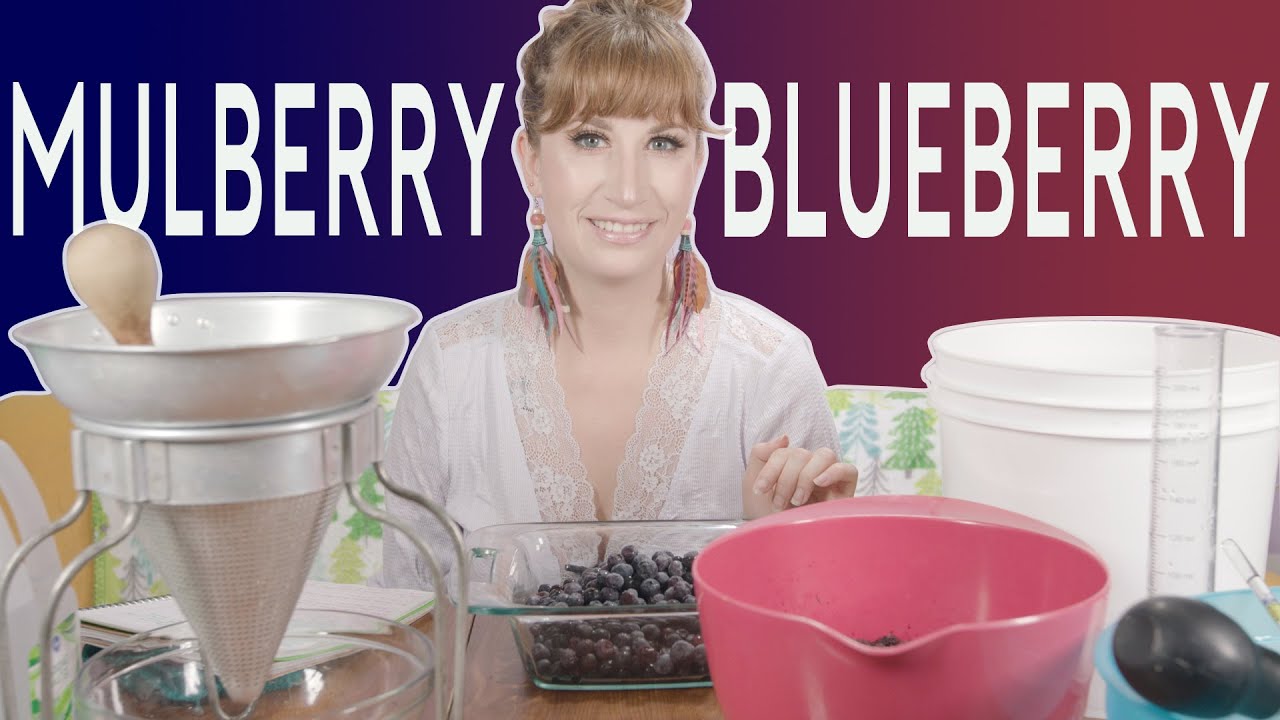
If you’re looking for some wild foraged ingredients, depending on where you live mulberries are a great option! Out here in Virginia they grow wild all over the place. I found a few trees where I lived in my neighborhood, and my dear friend Christina had a LUSCIOUS tree in her front yard I collected from.

The best way I’ve found to process mulberries is to sanitize (though if you want to wild ferment skip sanitizing), freeze, thaw, and crush the fruit. You usually don’t want to add many seeds of any kind of fruit to your mead, so I mostly use juice, but will add some pulp. Be warned though, when adding pulp to a bottleneck carboy, you risk it clogging up which may lead to an explosion (not dangerous, just messy). I speak from experience!
This is another mead where I didn’t add any nutrients, nor did I stabilize. Regardless of the lack of nutrition, I believe there was enough in the juice and pulp to make a pretty fabulous mead – it got a rating of 45 at Mead Stampede! So if you’re really new to home brewing and are looking for a simple recipe, this may be a good one for you to try (If you’re able).
I’ve also made this mead more than once, I love the flavor and depth! The only thing that could make this better is if I grew the blueberries myself, haha. Really though, play with the recipe, do your own acid/tannin balancing (though this is pretty naturally balanced), and make whatever changes you want!
The following is the recipe I used for my second batch which was for 3 gallons.
Primary:
Pack of Lalvin 71B
2 Quarts Knudson Blueberry Concentrate
7lb Mulberries crushed – Added about 2.5lb Pulp
10lb Orange Blossom Honey (Other honeys would work as well)
SG: 1.138
Follow TOSNA nutrient schedule with FermaidO
Secondary:
Rack
Stabilize
Backsweeten to taste
Acid & Tannin Balancing is recommended!
Clear & Bottle